
Executive Insight Report Published: Industrializing Clinical Biometrics
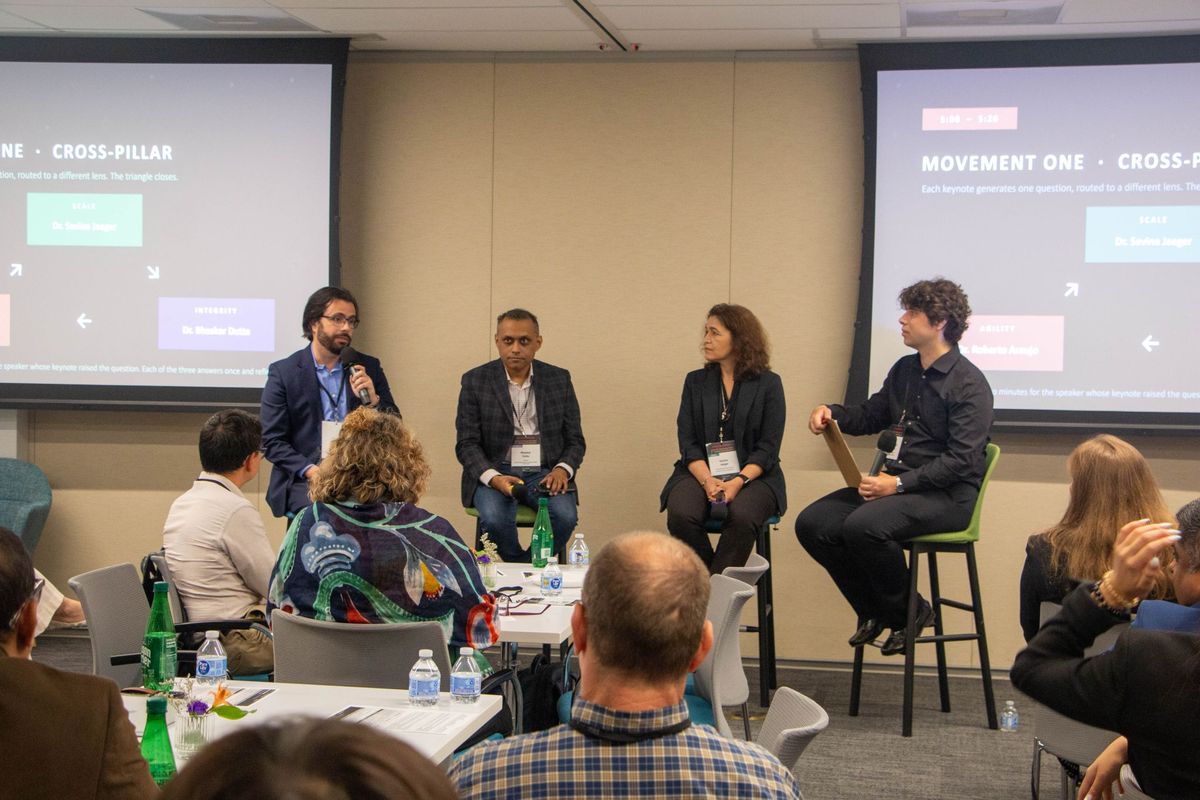
Hill Research has published the Executive Insight Report from Session 2 of the Clinical AI Mastermind 2026 series: Industrializing Clinical Biometrics: What the Room Found. The report distills the July 29, 2026 session at Johnson & Johnson in Cambridge, where about 40 senior clinical biometrics, data science, and clinical development leaders from roughly 28 organizations debated whether AI-assisted work can become trusted clinical evidence.
The Claim the Room Tested
The session opened with a claim to test: that clinical biometrics is no longer mainly a productivity problem, and has become an enterprise AI problem. The room did not push back on it.
Before the session, attendees were asked one open question and their answers were posted on the wall in their own words. Of 23 substantive responses, 10 converged on the same point: the data underneath clinical work is not standardized, not connected, and not yet traceable.
What the Report Covers
The report carries the three keynote lenses from the session, Scale, Agility, and Integrity, along with the panel discussion in which each speaker responded to a question drawn from another speaker’s material rather than their own.
Dr. Savina Jaeger, Executive Director of Biostatistics at NovaBridge Biosciences, spoke to Scale:
“What we can scale with AI is standardized production. What doesn’t is the judgment that decides whether the output is right.”
“You cannot hold a model accountable. You hold a human accountable.”
Dr. Bhaskar Dutta, Head of Digital Health and Medical Affairs Technologies at Alexion Pharmaceuticals, spoke to Integrity:
“Show me how you got the results.”
One question, raised independently by two speakers who had each prepared separately, went unanswered: if AI takes over the junior work, where does the next generation learn judgment? The report carries it forward as an open question for Session 3.
Why It Matters for Hill Research
The session’s closing line, “AI can scale production. Only an accountable operating system can scale evidence,” is the operating problem Hill Research is building TriClick to address: connecting protocol intent, data standards, statistical specifications, programming, review, and traceability so AI supports clinical accountability instead of bypassing it.
Context for Hill Research
Session 2 was co-hosted by Hill Research, AKT Health, and Tech Impact Foundation, with Johnson & Johnson as anchor host. Session 3, “The Architectural Shifts in Phase Three,” is scheduled for October 7, 2026.
Learn More
- Read the full Executive Insight Report
- Clinical AI Mastermind Session 2 recap
- Clinical AI Mastermind Session 1 — The Submission Last-Mile
- For partnership inquiries, contact: info@hillresearch.ai